Real Transportation Strategies for Greenhouse Gas Emissions Reductions
1. Smarter Travel: Reducing the growth in the number of vehicle miles traveled
For 20 years leading up to 2005, population growth and a strong economy spurred travel growth by more than 2 percent per year. With the lagging economy and higher gas prices, however, we saw a drop in 2008 from 3 trillion to about 2.9 trillion vehicle miles traveled (VMT).
By holding growth in miles driven to 1 percent annually, along with increasing fuel economy, the United States could achieve its emission goals.
As the economy recovers its strength, and more people drive, the question is: what are the best ways to reduce the number of vehicle trips, and still meet the nation’s mobility needs?
Transit Solutions
 Increasing the use of transit where it exists and providing transit options where they are not available are tools for reducing the rate of growth in VMT. AASHTO has proposed doubling the nation’s transit ridership by 2030 and increasing transit funding from $10.5 billion to $18.5 billion each year.
Many states are proposing transit expansions to alleviate congestion and reduce emissions. One example in northern Virginia is the $2.6 billion Metro Rail Extension to Tysons Corner and Dulles Airport. Final design is underway for an extension of service from the Metrorail subway system serving the Metropolitan Washington, D.C. region, to Tysons Corner, Virginia’s largest employment center and Dulles International Airport. Construction will begin in March 2009 on Phase I of the project which is expected to be completed in 2013. The project will provide high-capacity transit service in the Dulles Corridor, resulting in travel time savings between the corridor and downtown D.C., offering a viable alternative to automobile travel to the airport and to Tysons Corner shopping and job sites, and supporting future transit-oriented development along the Metrorail line.
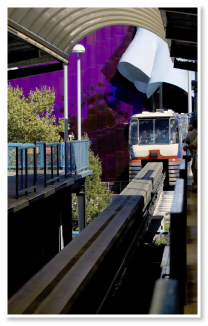
In Seattle, some 92,000 passengers tried out Seattle’s new light rail line on its opening weekend in mid-July, when riders were invited to ride-for-free to experience the 14-mile line between downtown Seattle and Tukwila. Construction of the city’s new mass transit system took five years and cost $2.3 billion. The light rail system uses a bus tunnel through downtown Seattle, which will continue to accommodate buses. By the end of the year Sound Transit says light rail will reach Sea-Tac Airport. By 2016, a $1.9 billion tunnel will reach the University of Washington. And voters have already approved spending $18 billion to extend lines to suburban stops in Lynnwood, Federal Way, and Redmond.
A standard two-car train can hold 400 people packed, or at least 300 comfortably. Officials say ridership will reach 26,600 boardings a day by next year.
The Charlotte Area Transit System launched its $426.7 million South Corridor line in 2007. A year after Lynx Blue Line light rail debuted in southern Mecklenburg, the 16,000 weekday ridership on the 9.6-mile route to and from uptown Charlotte was “way beyond” expectations, according to a CATS spokeswoman.
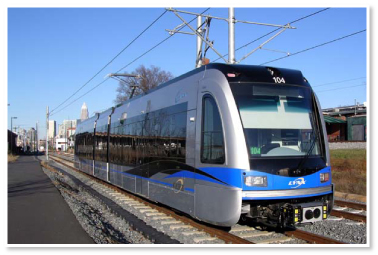 CATS has opened new parking spaces for the Lynx stops to help morning commuters—many of whom face the “full” message board sign at the 1,100-plus-space deck, then drive to other light-rail stations for spaces. Four more rail vehicles are on order, Leier said, and should be available in two years.
These examples illustrate the benefits of increasing transit service. First, transit systems can reduce urban congestion by removing vehicles from the road when commuters opt to take the bus or light rail system. The elimination of thousands of vehicles from city streets also serves to reduce greenhouse gas emissions.
In addition to light rail systems, other communities may expand transit service through bus service.
Bus-Rapid Transit. Many communities will enhance their bus operations through innovative improvements to system design and performance. Low floors and multiple-doors will be used to speed up passenger loading, while dedicated lanes will make it possible for trips to be made by bus faster than would be possible by private automobile.
Paratransit Services for Older Persons and Persons with Disabilities. The aging of America is creating a huge demand for both fixed-route and paratransit services. Improved paratransit services will be needed in cities, suburbs, and rural areas. Connecting rural America with medical and other services will be especially helpful.
Intercity Bus Needs. Additional funds will be needed to expand intercity bus services to rural communities. Demand for over-the-road charter bus services will flourish for tours and tourism as the Baby Boom generation hits retirement. As airport capacity and airspace become strained, viable alternative service for trips of 300 miles or less will be provided with great success using intercity buses and intercity passenger rail.
There are many other options for reducing growth in travel demand from van sharing, carpooling, and telecommuting to congestion pricing and other pricing mechanisms.
Carpooling, vanpooling, telecommuting, and trip chaining can achieve great GHG reductions. Currently, work-trip carpools and vanpools receive little government support, but they provide seven times the passenger miles of transit—and carpooling/vanpooling could be doubled or tripled at relatively little cost. These strategies are particularly important because they are effective and low cost for rural and suburban locations.
Other possibilities involve land use strategies which include transit use, bicycling, and walking. Portland, Oregon, for example, has invested in their bicycle infrastructure and has documented greenhouse gas reductions. The Rails-to-Trails Conservancy estimates that increased bicycling infrastructure in Portland could reduce emissions by 0.73 million metric tons of carbon dioxide by 2040, with a net economic benefit of $1.4 billion from fuel and health care cost savings.
AASHTO has proposed greater support for biking and walking investments; $500 million or more per year.
Intercity Passenger Rail Service
 The U.S. is experiencing a renaissance in intercity passenger rail transporta-tion, spurred in part by the Obama administration’s strong commitment of $8 billion for intercity and high-speed rail investments though the economic recovery act. There were 278 pre-applications submitted for intercity passenger rail grant funding totaling $102 billion—nearly 13 times the $8 billion Congress has appropriated for rail projects under the American Recovery and Reinvestment Act, according to the Federal Railroad Administration.
Congress is also demonstrating its commitment to intercity and high speed rail, with the House of Representatives funding $4 billion for such projects in its proposed appropriations bill for fiscal year 2010, and House Transportation and Infrastructure Chairman James Oberstar proposing $50 billion as part of his surface transportation authorization bill.
Public support is also strong. For example, voters in California approved a $9 billion bond issue to support the development of an 800 mile network with anticipated speeds of 220 miles per hour to meet the mobility needs of their growing population and to relieve congestion on freeways and airports. Construction may begin in 2011.
Intercity passenger rail service in North America can provide the traveling public with a genuine transportation alternative. Passenger rail service which is well-connected to other transportation modes and systems, including commuter rail and other public transit alternatives, will further enhance its utility.
AASHTO has stated it is “time for the United States to provide a robust intercity passenger rail network that provides competitive, reliable, and frequent passenger service, comparable to world class systems in other countries.”
Passenger rail service also has the potential for contributing to reduction of greenhouse gas emissions. According to the Department of Energy’s Oak Ridge National Laboratory, intercity passenger rail is 17 percent more efficient than air travel and 21 percent more efficient than auto travel. A 2006 report, prepared jointly by the Center for Clean Air Policy and the Center for Neighborhood Technology, provided a technical analysis demonstrating that the implementation of high-speed rail technologies on federally-designated high-speed rail corridors would result in a net savings of 6 billion pounds of carbon dioxide emissions. The report used the 11 federally designated high-speed rail corridors in the United States to estimate the annual GHG benefits, if these high-speed rail systems were developed as planned.
Writing in the 2009 winter edition of the Transportation Research Board online publication Intercity Passenger Rail Systems Update, Tim Gillespie, a past vice president of Amtrak notes that “Other countries have already congestion and experienced emission reduction benefits by employing newer rail technology and high-speed rail corridors. The high cost of fuel in Europe and Asia has promoted development of high-speed rail, and the results of this development demonstrate that, when reliable and convenient rail passenger service is available, customers and operators will move away from high-carbon producing modes—particularly as the cost of auto and air travel increase.”
Land Use Strategies
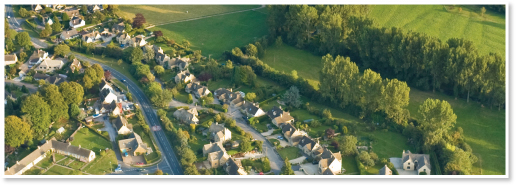
Land use strategies can also help to reduce travel demand. With more expensive oil on the horizon, development patterns can be expected to “move closer in” to central cities and older suburbs. Infill development can accommodate housing and commercial demand, particularly when transportation services are upgraded to accommodate such growth. Other land-use options that can help reduce emissions include new, mixed-use, transit-oriented development and compact single-family subdivisions.
Two examples of such land-use strategies include:
The Jersey City Comeback: An Urban Infill Success Story.
 In the 1960s, Jersey City, just across the Hudson River from New York City, hit hard times; its railroads went broke, and many of its factories closed. Today it has experience a comeback. It is clean, green, and growing. Urban planners see it as an example of how the nation can accommodate some of the 100 million Americans expected by 2040. Over the past 25 years, it has gained 30,000 residents, 27,000 jobs, and 18 million square feet of prime office space. The light rail transit line built by the New Jersey DOT along Essex Street in its downtown has spawned 3,000 residential units in five years. Toll Brothers Construction, better known for building big houses in the suburbs, formed a division to focus on locales like Jersey City, “because that’s where our customers are going.”
Lakewood, Colorado: A Suburban Infill Success Story.
In 1966, the 1.4 million square-foot Villa Italia shopping mall, the largest mall in the Denver region, opened to great fanfare in Lakewood, a suburban community of 150,000. Thirty years later the mall had become 70% vacant, and in 2001 it closed. Over the next four years, the City of Lakewood together with public-private partnership implemented a plan to transform the dying shopping center into a 22 block downtown-in-the-making. By 2005, Belmar, as the development came to be known, had 650,000 square feet of retail/restaurant/entertainment space, 212,000 square feet of office space, and 109 apartment units. Hundreds of additional apartment units and town homes were under construction. This 104 acre project was given a design award in 2007 by the Urban Land Institute for “exemplifying the potential for transforming post World War II suburbs into more diverse, compact, sustainable, pedestrian-oriented, and transit-oriented suburban infill development.”
Road Pricing/VMT Tax
In recent years, the concept of road pricing has received increased attention, primarily as a means of managing congestion and generating additional funding for transportation. Its advocates believe that if implemented on a broad scale, road pricing systems could reduce GHG emissions as well. Road pricing can take many different forms, from tolls to parking pricing to VMT-based pricing to gasoline surcharges. These types of initiatives could also help limit GHG emissions.
Variable rate pricing for the use of High Occupancy Toll Lanes (HOT Lanes) is one option for reducing urban congestion and managing traffic flow. The HOT lane concept was pioneered in San Diego on Interstate 15 in the 1990s when drivers of single-occupant vehicles were allowed to pay a toll and use an eight-mile stretch of an HOV lane. San Diego now plans to expand this initial eight-mile segment to a hundred-mile variably-priced system that will not only pay for the new lane capacity, but generate funding for transit as well. Several HOT lane projects have been built or are about to be built in Texas, Virginia, Minnesota, and elsewhere.
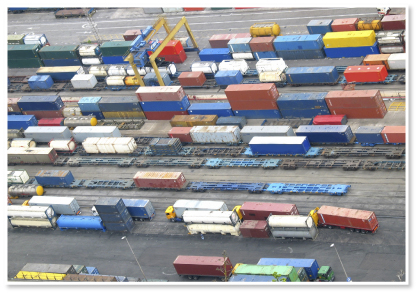
Another example of congestion pricing has been implemented to relieve truck congestion at the nation’s largest port complex.
PierPASS is a program created by marine terminal operators at the Los Angeles and Long Beach ports to reduce truck traffic during peak daytime hours, alleviate overall port congestion, and lessen the industry’s environmental impacts on neighborhoods and air quality. By imposing charges during peak daytime hours through an electronic toll system, trucks have been encouraged to operate at night and on Saturdays.
In July 2006, PierPASS announced that 2.5 million truck trips have been diverted from peak daytime traffic during the first full year since the “offpeak” program was launched in 2005. Offpeak is taking up to 60,000 truck trips per week out of daytime freeway traffic patterns, producing a notable reduction in daytime congestion on roads near the ports.
VMT tax trials in Oregon and by the Puget Sound Regional Council suggest that when people pay a fee based on their driving, they tend to drive fewer miles mainly by combining trips. Implementation is complicated, though, because it may involve installing GPS or other devices that monitor the amount of miles driven.
